

Economics in Healthcare Policy: An Analysis of Two Viewpoints, by Trenton Schmale
June 11, 2016 by cmonte
[fve]https://youtu.be/Hjs9t7gmx4c[/fve]
There’s more to economics than just the Austrian and Chicago schools of thought. When it comes to healthcare policy, sometimes free market vs. government-centric proposals have more sway than either theoretical economic approach. Economics and political policy (in this case healthcare policy, which has become highly politicized) are closely intertwined, however; so, the more both doctors and patients understand the likely results of free market and government control options, the better healthcare choices they can make.
More by Trenton Schmale
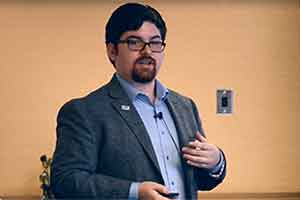
Healthcare Economics from an Austrian Perspective, by Andrew Widener
June 11, 2016 by cmonte
[fve]https://youtu.be/ouA1gnp3B4g[/fve]
Understanding healthcare policy and healthcare economics theory has become important even for doctors to practice medicine. Andrew Widener, medical student from The University of Texas McGovern Medical School addresses the economics of healthcare from an Austrian economics perspective. By understanding underlying economic principles, doctors will be better equipped to foresee and engage with both the positive and negative outcomes of healthcare policy.

BRI Chapter Communication Strategies, by Alicia Seggelink
June 4, 2016 by cmonte
[fve]https://youtu.be/M0hARPhgCs8[/fve]
Alicia Seggelink, BRI chapter leader from Rosalind Franklin University Medical School discusses how to create an effective communications strategy. While aimed at helping BRI chapters be successful, this tool can be used for almost any organization.
Alicia was recently selected to be the Medical Student Section (MSS) representative to the Council on Communications for the Illinois State Medical Society (ISMS). According to Alicia, her quest for that position came directly from her experiences at BRI’s recent 4th Annual Leadership Conference in Washington, DC.

How to run a successful BRI chapter, by Mary Kathryn Hahn
June 4, 2016 by cmonte
[fve]https://youtu.be/EqFW5RC5VIk[/fve]
Mary Hahn, from SUNY Downstate Medical School, experienced a bumpy ride establishing a BRI chapter at her school. In spite of a few setbacks — not the least of which was the campus environment not entirely welcoming of free market ideas — Mary persevered, and not only established a successful BRI chapter, she also provided a place for other like-minded medical students to be able to participate in a conversation for free market healthcare.

Swaying Hearts and Minds to Healthcare Freedom — Part III (of 3): Cash based healthcare system
May 27, 2016 by
The Blog post was written by a BRI Student Leader who wishes to remain anonymous.
… And now for some basic questions about a cash based healthcare system, since we’ve put the philanthropic and economic questions to rest…
I’ve heard some conservatives advocating for more cash-based medical care. The insurance plan I have now is expensive, but it covers most of my healthcare needs.
To understand the state of healthcare in America today, it is useful to understand the historical background in which our system developed. Our tradition of employer-sponsored health insurance arose during the 1940s in response to a government-imposed freeze on salaries. In order to supplement employees’ income, companies began offering health insurance benefits. When the wage freezes were repealed, employer-sponsored insurance did not go away with them. Americans became accustomed to employer-sponsored insurance, and being covered by a comprehensive health insurance plan became the norm. Unfortunately, this has led us into a state of over-insurance: Americans are paying excessive amounts of money for healthcare benefits that they previously purchased directly through cash payments.
Insurance is a tool to hedge against unexpected misfortunes, like your house burning down or a natural disaster. It is not meant to be used for routine expenses like paying your electric bill or buying groceries. However, Americans now buy health insurance that includes a spectrum of both routine and catastrophic medical care. When proponents of free enterprise talk about cash-based systems, they are advocating that we shift back to a system in which consumers pay for routine medical costs out of their own pocket. The point of this is to align consumers’ incentives so they are naturally drawn to make the most efficient economic decisions. If you are responsible for paying for your routine healthcare, you will be inclined to search for the services that fit your preferences, and you will be hesitant to consume services that are unnecessary. It is easy to spend someone else’s money, but people spend much more deliberately when it is their money in question. The only “single-payer” for routine care should be individual patients themselves.
What are the benefits of moving to a cash based healthcare system?
If we shift back to a cash-based system for routine medical expenses, health insurance still has an essential role to play. Health insurance will still be essential to insure against unexpected, catastrophic medical events. The price of this insurance should be reasonable because it would only cover medical events over a certain dollar amount; all of the routine care that is inflating health plan pricing today would be excluded from catastrophic insurance.
A system based on mixed cash payments and catastrophic insurance would be extremely beneficial for patients and their doctors. Cash payments for routine care would vastly simplify the insurance payments fiasco that doctors experience today, reduce administrative costs, and allow physicians to spend less time filling out paperwork and more time with their patients. Physicians and patients around the country are beginning to embrace this system, and early results show that the cost of care is decreasing, health outcomes are stronger, and physician satisfaction with their work is much higher. A few examples of successful cash based practices include the Surgical Center of Oklahoma, Atlas MD, and Gold Direct Care.
Although this concludes our series on free market medicine point/counterpoint, I hope it is just the beginning of the dialogue on how we can work together to transform American healthcare. Do not hesitate to share your beliefs with your peers, despite what they might believe currently. Dynamic social change occurs because small groups of people are willing to speak for what they believe, even if it is unpopular.
This is our time.

May 25, 2016 by
The Blog post was written by a BRI Student Leader who wishes to remain anonymous.
These questions naturally follow the first (mistaken, in my view) assumptions in Part I of this series—first, that we have a completely, or mostly, free market healthcare system, and second, that doctors should be more altruistic perhaps than other service providers.
I believe all people deserve access to high quality healthcare services regardless of their ability to pay. What will happen to the poor and disadvantaged in a free market system?
A system that encourages transparency, empowers individuals to make efficient economic decisions, and removes class barriers, offers the poor the best opportunity to receive high quality healthcare. Considering the needs of the poor is essential when advocating for healthcare reform. The social paradigm that The Right loves markets and hates the poor is not only political invective, but completely false. Conservatives and libertarians appreciate free enterprise as the single most important factor in lifting billions of people out of poverty in the last century. Free enterprise is the greatest driver of wealth creation in the history of mankind. Admittedly, The Right often comes across as out-of-touch with the needs of the poor because our dialogue focuses too much on policy and too little on compassion.
Despite conservatives’ ineffective narrative, I submit that free enterprise offers the poor their best chance to receive high quality healthcare. However much we hope to improve healthcare, there will always be individuals who cannot afford to pay for their own care. Medicaid—government healthcare for the poor—still has a role to play in providing the means to care for these people. Today, Medicaid patients are often viewed as less desirable by physicians and hospitals because Medicaid reimbursement rates are substantially lower than private insurance, not to mention the paperwork and bureaucracy involved. This produces two possible outcomes, both of which are bad for the poor: 1) a selection bias that makes it difficult for them to find a physician, and 2) a care bias that sometimes leads them to receive inferior care compared to a privately insured patient. Both of these outcomes are unacceptable but expected results of the system that we have right now. Medicaid itself has led to the formation of a de facto caste system in terms of access to care and payments.
“Despite conservatives’ ineffective narrative, I submit that free enterprise offers the poor their best chance to receive high quality healthcare.”
Feasible solutions exist to simultaneously address the healthcare needs of the poor and eliminate the stigma attached to Medicaid. Instead of funneling money to the states to finance Medicaid as its own insurance plan, the Federal government could use these funds to finance health savings accounts (HSA) for eligible Medicaid beneficiaries. Individuals who pass an income acid test, for example 125% of the federal poverty line, would be eligible to receive an annual deposit of funds into a tax-free bank account (an HSA). Funds deposited into the HSA can only be used for healthcare expenses. The HSA beneficiary decides how he wants to spend the money—on primary care services, catastrophic insurance premiums, elective care, etc. Following the logic of my prior argument for more cash-based primary care, Medicaid beneficiaries could use their HSAs to pay cash for planned expenses and to pay the premiums on a catastrophic insurance plan.
This solution—tax-free savings accounts to pay cash for routine care and premiums on a catastrophic plan—is not just what I wish for the poor, but what I wish all members of society would have the opportunity to purchase. Today, due to Medicaid’s low reimbursement rates, many physicians intentionally limit the number of Medicaid patients they accept into their practice. With this solution, it would no longer matter to healthcare providers whether their patients are Medicaid (or Medicare) beneficiaries because all patients would purchase the same basic services and be covered by a private catastrophic plan. This solution empowers individuals to make decisions for themselves without intermediary meddling and removes the government from its unnecessary and inappropriate role as the poor’s medical care overseer.
Doctors should be committed to their patients first and worry about how much they’re being paid later. How do you reconcile your interest in policy and finance with the attention you should be taking in your patients?
Physicians commit themselves to nearly a decade (or more) of intense medical education—after obtaining their undergraduate degrees. These years of rigorous education give way to even more intense years of clinical practice. Unfortunately, many middle aged and older physicians are discovering that the burden of triple-documenting their clinical encounters, haggling with insurers for payment, and managing the regulatory environment is inhibiting the main reason they became a physician in the first place: to take care of their patients.
My interest in healthcare policy stems not from a concern with how much I will be paid once I become a physician, but concern for my freedom to determine the scope and direction of my practice. I am, of course, concerned with payments, but I am more frightened by the increasing dissatisfaction of physicians for the noble profession that so many men and women enter with the intent to become healers of the sick, not slaves to the Electronic Medical Records (EMR). I am one of thousands of first-year medical students across the country excited to begin our long medical careers; but, the statistics say in just a few years, a large number of my colleagues will be dissatisfied with their compensation, irritated with their workload, and concerned about the limited time they are allowed to spend with patients.
The market solutions I advocate for are not magic bullets, but they are progress towards fostering an environment that encourages efficient spending, rewards high quality delivery, and allows physicians to build the relationships for which most of us entered into the practice of medicine in the first place. Top-down regulation has consistently burdened the medical profession and driven up the cost of care across the board. If physicians do not begin speaking up for their interests, they will continue to see their autonomy wrested away by out-of-touch interests. Long term effects of physician silence will be bad for physicians and worse for their patients.
Let us seek to enable a healthcare ecosystem that empowers both buyers and producers of care to enter into mutually beneficial voluntary exchange without the interference of intermediaries with no vital interest in our relationships.
In Part III, we examine some fundamental questions about insurance, regardless of which political side of the fence you prefer on this issue.