Exploring the insurance side of medical practice: India vs. the U.S.
December 27, 2017 by morgan-kohls
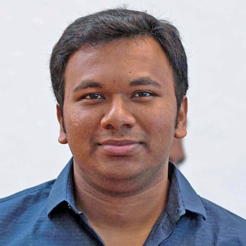
I am a doctor from India. I have three years of work experience in primary care in India. Currently, I have been working on a Master’s in Public Health at Icahn School of Medicine at Mt. Sinai since 2015.
One of the main differences in the practice of medicine between India and the U.S. is the insurance system. Being an international medical graduate, I found it very difficult to understand insurance concepts and the way medical insurance works. Even after being in the U.S. for three years, I still find and learn new aspects of the way medical insurance works here.
In India, there are two main ways the medical system works: through state-run institutions and through private hospitals and practices. State-run hospitals do not charge patients except for advanced radiological and imaging studies. Even then, the charge for a CT scan is $10 and an MRI brain scan is $50. These payments are made in cash and done immediately before or after the test is performed. Generic medications are provided at no cost in the state-run hospitals, and some medications are sold at a subsidized rate. Private hospitals charge patients directly. ost payments are made immediately in cash or checks. There are some private hospitals like Aravind Eye Care System, which treat patients for $1. These low charges and free health care are possible in India because of the case loads and cash payment system.
In contrast, the U.S. health system is completely insurance driven. Although I had assumed that the U.S. health system is expensive, I was shocked at the huge bills for an ER visit and the cost of basic medications. I wasn’t aware nor had heard of cash payments in the U.S.
It was Benjamin Rush Institute that showed me that cash payments are possible in the U.S., too. BRI exposed me to the concept of DPC—direct primary care. After attending the DPC Nuts & Bolts to 2.0 conference in Orlando, I am sure that medical costs could be drastically reduced in the U.S., too. I was able to appreciate the cost reduction both for buying medications and for diagnostic testing when direct cash payments are made. The case studies of doctors practicing DPC was really useful to give the audience a context of how good the system is for both the practicing doctor and the patient.
I feel all primary care providers should make patients’ health their priority and work towards making this DPC venture a successful one. I feel still there is a long way to go before this could be implemented and practiced throughout the nation; yet, it could be achieved if the message reaches all physicians and the public. If the public demands these kinds of services, then doctors and institutions will slowly start switching over to DPC.
BRI is doing a wonderful job by targeting the right population: young medical school students. BRI could also plan on targeting the public, so they could have far reaching benefits for their efforts. Having practiced in India, I really am able to appreciate how good the system of DPC is for patients and their families. I am planning to do my residency in Family Medicine and start my own private practice. I will definitely be practicing DPC in the near future. Thanks to BRI for introducing me to such a wonderful opportunity in the US.
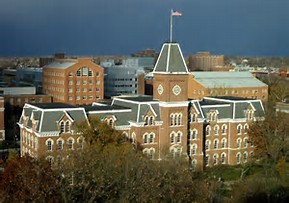
2018 BRI Student Leadership Conference: Ethics of the Patient-Doctor Relationship, Columbus, OH
December 20, 2017 by
Ethics of the
Patient-Doctor Relationship
Thursday evening, March 8th through Sunday noon, March 11th, 2018
Ohio State University School of Medicine Campus, Columbus, OH
APPLICATIONS FOR THE CONFERENCE Ethics of the Patient-Doctor Relationship are being ACCEPTED for BRI student leader members! Speak with your chapter leaders and officers and determine which students should attend!
We will address today’s pressing questions:
- What are the ethical requirements related to patient confidentiality—and how do mandates like HIPAA and EHRs affect them?
- Is healthcare a right? (e.g. single-payer or Medicare for All)
- To whom does a doctor owe loyalty? An employer or insurance contract, government (“state”) rules, or the patient?
- What happens when regulations, government policy, and other third parties insert their priorities into medical decision making?
- How does the concept of “social justice” affect the patient-doctor relationship?
There are examples throughout history where blatant disregard for medical ethics and the patient-doctor relationship are obvious and egregious—The Third Reich and today’s Communist China are just two examples. But what about when interference in the patient-doctor relationship is more subtle? What about ‘rationing,’ and ‘the greater good?’

At BRI’s 2018 Student Leadership Conference, we will explore the ethics of the patient-doctor relationship and dig deeply into who is responsible for which aspects of this relationship, and what is the proper and fitting role of government in this relationship?
We have an exciting lineup of speakers for you, including Drs. Jules Madrigal-Dersch, Bob Emmons, Raul Atal, Sameer Lakha, and Twila Brase, RN. We are also doing something a little different this year—we’re opening up Friday’s luncheon Keynote session to the greater OSU student body, as well as the standard Friday night panel discussion.
It’s going to be a GREAT conference. You won’t want to miss it.
Click HERE to access the dedicated 2018 Leadership Conference web page. It will be updated frequently and will be your best source for the latest details, agenda, speakers list, and logistics.
Get going on holding events, event, events so your chapter can win an award to send an extra student or two to the conference!
Click HERE to apply to attend the conference.
If you still have questions after reviewing the CONFERENCE WEB PAGE and the APPLICATION FORM, email [email protected].
Nothing pays like (physician) autonomy!
October 30, 2017 by saml
“Nothing pays like autonomy.”
Dr. Julie Gunther (SparkMD) gave one of the most inspiring quotes I heard at the Direct Primary Care (DPC) conference in Orlando (co-sponsored by Docs 4 Patient Care Foundation and the Florida Medical Association): “Nothing pays like autonomy.”
This is a very powerful idea. Medical school places a very large debt burden on its graduates. Whether students care to admit it or not, this debt load is a highly influential factor in one’s decision regarding a medical specialty. It’s been amusing to observe students’ attitudes as we progress through medical school together. As first year students, many claimed, “It’s not about the money.” As Step 1 approached at the end of second year, I heard students remarking, “I need to do well on this exam to get into a competitive specialty that pays well to pay off these loans.” As third year continues, I hear more students remarking on which specialties pay the highest salaries. This would be more amusing to me if it were not so sad.
Making a decision as critical as a future career choice based merely on the current medical model, with no understanding of the history of medical practice models nor how Medicare/Medicaid influence payment structures, is destined to lead to disappointment, frustration, and burn out. I firmly believe this is a major factor in the high physician “burn out” rate currently facing the medical profession.
Under the current medical model, primary care is not well compensated and not well respected. Rumors abound of primary care physicians practicing “treadmill medicine” and fighting with insurance companies on a daily basis for reimbursement. Who wants to deal with that? It’s quite rational to literally run away from such a specialty.
But this situation reverses in the DPC model. Not only is DPC pure in the sense of no third parties and no red tape, it also gives back physicians the power to control their own destinies. We are no longer at the mercy of some bureaucrat or insurance company. We determine how much we work, how we work, and with whom we work.
As a direct primary care physician, you can see as few or as many patients as you like. You negotiate your reimbursements with individuals before they ever become your patients. You determine how you practice and the kind of lifestyle you choose to lead. These are all your decisions. You are fully autonomous, you are captain of your own ship. This in turn leads to dramatically improved career satisfaction.
It was inspiring to see physicians at the conference who grasped this concept and ran with it. They realized the power of DPC, and they couldn’t hold back their renewed energy.
“Nothing pays like autonomy.”
[Ed. note: Matthew Kavalek is a third year medical student at New York Medical College.]
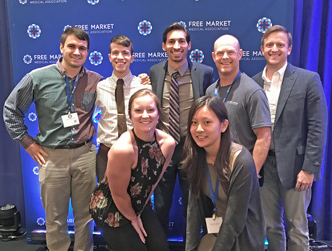
The free market medical movement at the Free Market Medical Association Conference
September 21, 2017 by akallen1227
Meeting people who are the face of the free market medical movement was a breath of fresh air. Americans pay more per capita for healthcare than all other countries in the world (OECD 2017). Part of the reason for this is administrative costs. Accountants, collections agencies, insurers, negotiators, lawyers and clerks are expensive cogs in the healthcare system. People like Dr. Keith Smith of the Surgery Center of Oklahoma fill an important niche. Free market healthcare facilities are treating the people that Obamacare has neglected.
By minimizing administrative costs through directly charging the consumer, the Surgery Center of Oklahoma can afford to provide competitive and transparent prices. Many of their surgery costs are lower than the deductible on peoples’ health plans. The leaders of the free market movement are my personal heroes because I know they are treating some of the most impoverished people —not just in America, but around the continent.
I understand that people against the free market medical movement of healthcare are afraid of corruption. Nevertheless, I find it hard to associate the word corruption with the same people that have put their own careers on the line to provide affordable healthcare to the uninsured and underinsured. Free market healthcare facilities are not intended to be alternative insurance. Instead, these facilities are meant to assist people in accessing affordable healthcare. I sent my friends from college the link to Keith Smith’s website to use as a reference point for quoted surgery costs at other hospitals. Price transparency helps all people look for the best quality solution.
Many of the Surgery Center of Oklahoma’s surgery costs are lower than the deductible on people’s health plans.” ~Maggie Wang, SLU
As free market medicine expands, I have no problem with saying that there is the potential not for corruption, but inequity. However, there is no market, communist government or ruling body in the world that has proven capable of preventing the rich from seeking luxury. The benefit of the free market facilities is that free market facilities are transparent about prices. The consumer understands the care they are purchasing up front. That is already a commendable improvement to what currently exists. Nothing is perfect. I encourage people to think of better solutions to address equity. I believe, though, that consumer awareness will lead to changes in creating a better system.
I am skeptical that the American government is capable of reaching a perfect solution for healthcare in the immediate future. While I would love just as much as the next person for the government to quickly solve the healthcare problem, in the meantime, I believe that the American people have an equal responsibility in finding a solution for healthcare. People in the free market movement such as Dr. Keith Smith are important players in exploring new frontiers to affordable care. The best part of attending the FMMA 2017 conference in Oklahoma City was not just meeting a group of people equally committed to improving healthcare, but also seeing them take personal responsibility in creating a better healthcare system for their communities.
[OECD (2017), Health spending (indicator). doi: 10.1787/8643de7e-en (Accessed on 05 September 2017)]

Opioid Epidemic: More Government is not the Answer
August 24, 2017 by
Many believe that only more government intervention can solve our economic and societal ills. Yet one can reasonably argue that big government programs, though well-intended, have worsened the very problems they were implemented to address. Notable examples: The War on Poverty has trapped people in poverty, the Affordable Care Act has made healthcare insurance less affordable, and No Child Left Behind has left the poorest children behind. Simplified or outright faulty analysis of the cause of the problems—as well as often predictable unintended consequences—are chief among the reasons these government programs fail. Even worse, the original problems, e.g. poverty, unaffordable healthcare, dismal inner-city public education, etc., have their origins in government policy unintended outcomes.
What are the government’s solutions to the opioid crisis? First, to step up the manifestly failed War on Drugs that has cost a $trillion, resulted in the violent deaths of 10s of thousands in our country and abroad, and not lowered illicit drug usage. Also sadly, mass incarceration of drug offenders—disproportionally black and poor—has made the “land of the free” the world’s largest jailor.
The second solution has been to intimidate physicians into curtailing the appropriate writing of pain relievers, unnecessarily increasing the discomfort of patients with acute painful conditions. Recall the data (from recent op-ed on opioid crisis) showing remarkably low rates of addiction for those given narcotics after surgery. Even worse, many chronic pain patients on long-term narcotics – a group that the CDC had found have a risk of opioid overdose death rate of less than 0.2%—who have been cut off from their pain medications that are of known purity and potency—have resorted to street versions of narcotics, which has resulted in significantly higher overdose events.
One can reasonably argue that big government programs, though well-intended, have worsened the very problems they were implemented to address.” ~Nicholas Pandelidis, MD
What about the origins of the despair underlying the opioid crisis? Again it can be argued that despair in significant part has arisen from well-intended but misconceived government social and economic policy.
Government run schools have manifestly failed those most in need. The most recent NAEP Trial Urban District Assessment testing found 45% of fourth-grade and 33% of eighth-grade students perform at or above the Proficient level in NAEP mathematics while 36% of fourth-grade and 34% of eighth-grade students perform at or above the Proficient level in NAEP reading. And the NAEP sets a relatively low bar for proficiency. This failure is not a result of lack of funding—between 1970 and 2010 spending per student has more than doubled in inflation adjusted dollars while achievement scores are unchanged—but rather a lack of educational freedom.
The War on Poverty truly has turned out to be an unintended war on the poor. The poverty rate was already on a steady decline before Johnson’s Great Society. It had dropped from about 22 percent to 15 percent between 1959 and 1965. Since 1965, $trillions have been spent and the poverty rate has settled in between 12 and 15 percent ever since, even though American society is now much more prosperous overall. The War on Poverty has restricted upward economic mobility of the poor, trapping generations of families in poverty. Further, it has created economic and social problems worse than those it was meant to solve: dependency, the breakdown of family with soaring rates of teenage pregnancy and single mother households, and collapse of urban community civil society.
In the entire history of mankind, there has been only one successful anti-poverty “program”—economic growth; and there has been only one successful principle for economic growth: economic freedom. The more freedom, the more growth.
Economic growth drove our country’s unparalleled prosperity, freedom, and national security. Between 1948 and 1987, per capita income more than doubled. Family income more than doubled for both those families in the lowest 20% of income and in the highest 20%. The poverty rate fell from 30.5% to 13.5%. And during that same time period, life expectancy rose from 67 to 75 years.
Sadly, our country has been in economic decline for the last 50 years. Our big government has increasingly taxed and regulated our once robust economy with a predictable result. In the 50s and 60s, annual GDP growth averaged over 4%, in the 70s, 80s, and 90s over 3%, and over the last 10 years a mere 1.3%. Government spending at all levels (federal, state, and local) amounted to 15 percent of GDP in 1940. In 1980, it was 30 percent. By 1990, it was 32 percent. And today, it is 36 percent. Government’s role in throttling the economy seems clear: the more government intervention, the less economic freedom, the less economic growth.
This trio of inadequate educational outcome of government schools, poverty programs and economic stagnation have robbed 10s of millions of the opportunity for and the dignity of self-sufficiency. It should not be surprising that there should be so much despair our society.
More or better-conceived government intervention is not the answer. Unintended consequences, wasteful implementation, and special interest plundering are unavoidable. But there is a better way—freedom. Not freedom for a particular class, or sexual orientation, or gender, or race, but freedom that respects and protects every individual’s freedom. Such freedom promotes societal tolerance, diversity, peaceful interaction, and prosperity. Freedom is good and true. Freedom is hopeful. Unlike government programs that can only be implemented through coercion, freedom does not need to be imposed; rather, only allowed to blossom and flourish.
Please join the campaign for liberty. Our future freedom and prosperity depend upon it.
From Nigeria to Hershey, PA: My clinical elective experience
August 15, 2017 by kristyhawley
I am final year medical student of the University of Ibadan, Nigeria. I am expected, as part of my clinical rotations, to do an elective program in any hospital of my choice around the world for a four weeks period.
After a rigorous search of suitable schools and hospitals, both locally and internationally, of where I would possibly be accepted, I got a place in Penn-State Medical Center (PMC) in Hershey, Pennsylvania. I was very elated.
A lot of paper work clearance had to be done on my arrival before I could start my rotation in the Neonatology Intensive Care Unit (NICU).
I did the rotation under attending Dr. Timothy Palmer. There were other hands always willing to carry me along throughout my stay in the unit starting from the medical students, the registered nurses (RN), nurse practitioners and other fellows in the unit. I was pleased with their kindness towards me during my short stay in the unit.
My expectations were very high as I had not only experienced the care of neonates in my school in Nigeria—I had also visited several websites and asked a lot of questions on how the neonates were taken care of in hospitals in America. What I saw and heard whet my appetite to the extent that my previous dislike for pediatrics was slowly changing to one of affection. I had high hopes of what I was going to be involved with.
Different cultures, different people, different environment, and I still had a pleasant experience.” ~Chidimma Ezeilo, BRI chapter member, University of Ibadan, Oyo State, Nigeria
When I got to the department, my expectations were not only met, but surpassed. The newborns in the various incubators aged from 23 weeks to term babies with several diseases, some of which I had seen my teachers in school manage, to others which I never knew really existed except in books. I had never heard of Brooke syndrome except when I got to the unit and saw a baby with it. I never knew I would see a child with Pierre Robins Syndrome with classical features glaring at my face. I would never have thought that a 23-weeker would ever survive to be able to grow into an adult who will live normal life (even with all sorts of tubes connected to the baby). The babies were connected to sophisticated instruments, which I had read about but never seen. Genetic analysis was done for babies who presented with specific congenital anomalies. Babies, as small as my foot (I am a size 12…so that is big enough) survived.
Of course some babies died (sad indeed). One case that intrigued me was a baby born with hypoplastic lungs. I was shocked that the baby was strong enough to survive the delivery process. But the child did not last so long in the unit.
Parents overall were happy with their children’s medical outcomes as they followed their babies’ care to the letter. Their questions were answered by the managing team with so much love, precision and empathy for the children. Physicians and other personnel working in the unit were always on their toes giving the children the best treatment they could possibly get for optimal survival. I was observing, asking so many questions, interacting with my team and growing my love for pediatrics— especially neonatology department— more and more.
The care was so different from what I had earlier known in Nigeria. The health care system allowed more babies to survive as parents paid, not from their pockets, but via insurance.
Different cultures, different people, different environment, and I still had a pleasant experience.
All in all, I had a great clinical elective working in the neonatology department in PMC, Hershey.
Going back to Nigeria, I will see everything from a different perspective. A lot needs to be changed in the health system in Nigeria, and I know that they can be modified despite the economy of the country. It needs the cooperation of every health personnel from the government to the medical student—such little things like the consultant-student relationship (if this improves a great deal, students will be more productive in their work) to the level of effective health insurance system for all. Many acts need to be implemented, but every day Nigeria will take the step up to reach the goal of good health for all.
I love pediatrics far more than before I started the rotation. I am very grateful for the splendid time I spent there and the knowledge I have gathered for the betterment of Nigeria.